From Drempels to Doors: On Belonging and Inclusion
What inclusion demands of systems, structures and relationships.
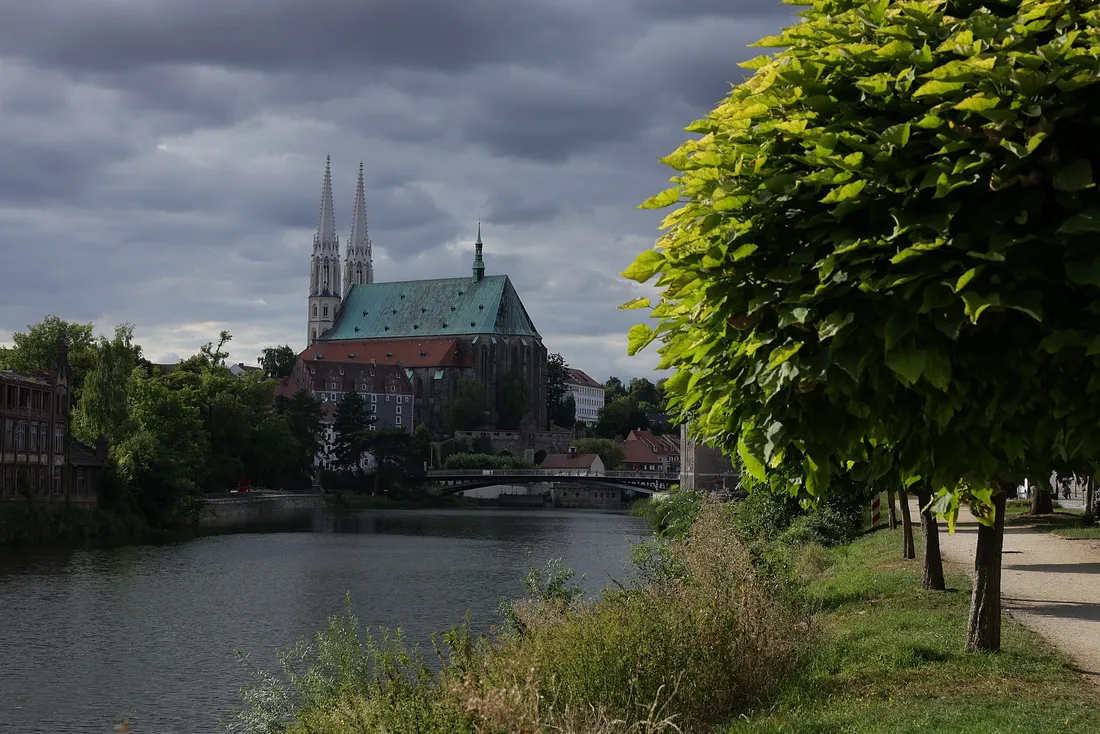
It was during the B-SHAPES summer school in Görlitz, a border town where the Lusatian Neisse river (German: Lausitzer Neiße; Polish: Nysa Łużycka) divides Germany from Poland. Two projects were running in parallel. One was a ten-day podcast track. I joined the four-day education track, which ended with a set of educational postcards and a lesson plan. Our tracks met only twice, once for a shared lecture block and once for a city walk and tour. One of the lessons that day had been about capturing borders via photography.
During that walk, around forty teachers from across Europe arrived a few minutes late for a church tour. While our Polish group leader apologized to the German pastor, I took a photo.
Later, when I looked through my photos to choose one that represented a border, I was a bit taken aback by that particular picture. I zoomed in and out, checking close-ups of their faces. The more I looked, the more it revealed itself. The Polish group leader’s arms were open, her smile modest, and she was trying to communicate. The pastor’s face tightened. Whatever the reason, the air between them felt like a border. For a moment, the border between them felt more palpable than any line on a map.
I chose not to publish that image.
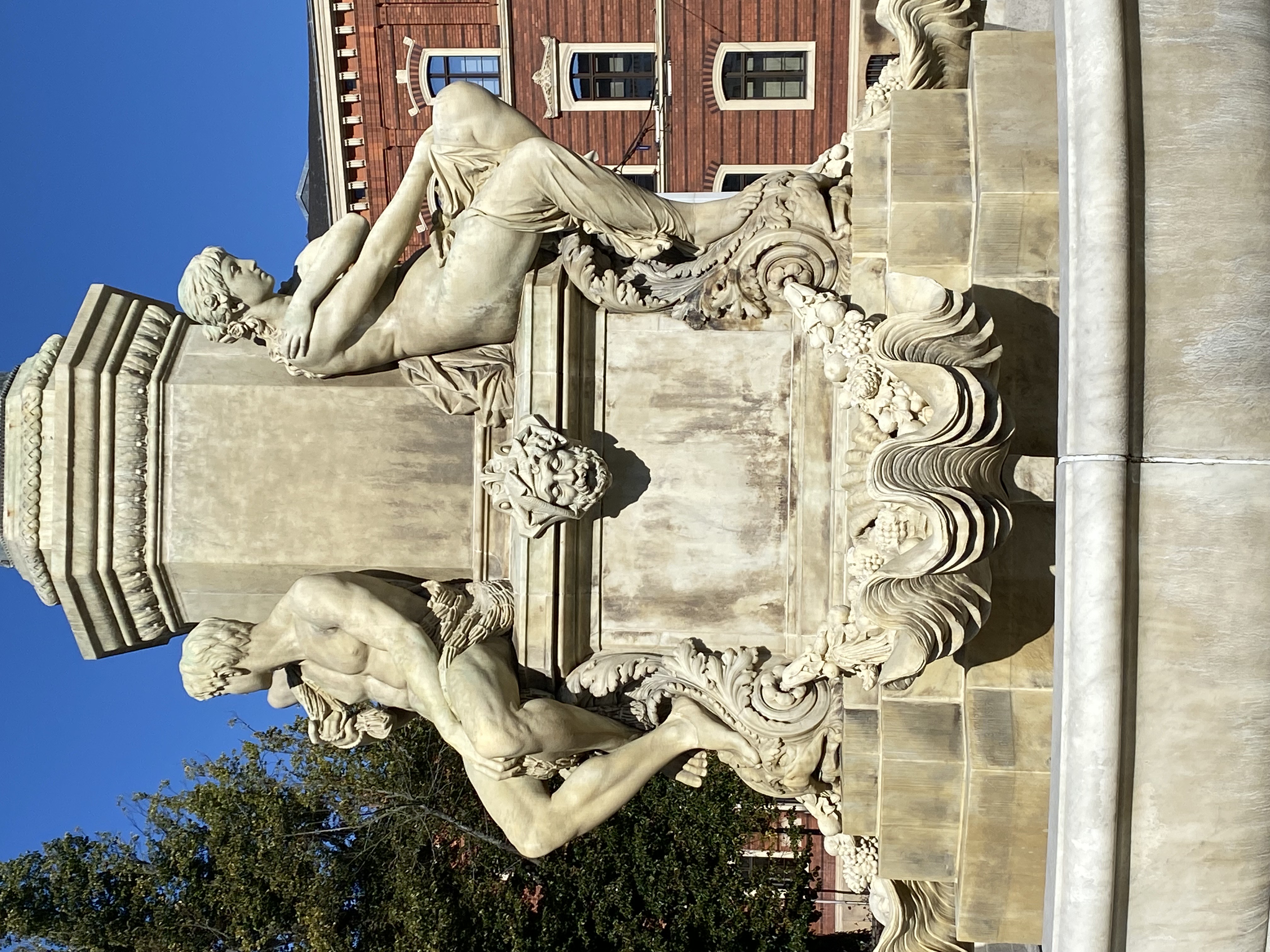
Later, as part of our final project, we were asked to show what a border means to you. I thought of that encounter, but it felt too private to display. Capturing invisible lines is always tricky, and doing so without consent felt wrong. So I walked through town, searching for a public stand-in for that private choreography. I found it in the central square, a statue of two figures carved from a single stone, turned back-to-back. They share a plinth, but not a gaze.
Borders are not always rivers or fences. Sometimes they are habits, a tilt of the body, a language we step into or out of, and the quiet struggle of belonging.
Görlitz is a city built on crossings. The river is both boundary and bridge, a daily reminder that borders can divide and connect in the same gesture. Seminars and citywork circled the theme from many sides. Historians traced how rivers and fences shape memory. Sociologists described regionauts, people who learn to live and move across borderlands and claim pieces of both sides.
The most vivid lessons happened outside the conference room. We learned to read borders in ordinary places and images, control posts and monuments that make borders visible, and watery crossings where even a ferry can become the border. In a lecture, a professor showed a photo from the German–Danish border where local youths had turned a fence into a volleyball net. We also tried borderwalks, walking interviews at sites chosen by locals to surface personal stories. It was rainy, and we shared umbrellas while residents guided us to their places. One spoke in Polish, and a group leader translated. It made me think about my students back in Brussels. I wondered whether switching languages in my school is its own kind of crossing.
Here is the image I use now: a statue in the square, two figures, one stone, sharing a foundation but never meeting each other’s eyes. To me it is shorthand for how borders quietly shape us, in history, in rules, and in everyday encounters, when a border acts without lines or fences and belonging is performed with a gesture or a word, when inclusion or exclusion is decided with a look.
In my Brussels classroom, language is a choreography. This is a Flemish school, so Dutch is the working language for lessons and corridors. My class uses English. Many students come from French-speaking homes and naturally switch to their home language with friends. The school has been clarifying Dutch-at-school guidelines indoors, while the playground remains multilingual. Crossings happen constantly, but rarely get named.
Sometimes the work is simple, naming the line between two chairs, asking what languages students dream in, or allowing a group to plan briefly in a home language before presenting in English. Sometimes it is harder, noticing who gets left out, who turns away, who is ignored, who does the ignoring, who waits for permission to belong, and who loses the chance to belong because the design is weak. I explore that design problem in my Alcalá piece.
Since then, I have kept thinking about how we can design classrooms that notice borders without worshipping them. What would it take to build not just proximity, but exchange, so that sharing a base does not mean facing away?
The photo I did not post keeps reminding me, some borders you cross, some you turn away from, and some you only notice by the shadows they cast.
Maybe teaching is learning to see those shadows, and sometimes, turning toward them.
You can also read the article here:
👉 The photo I didn’t post says more than the one I did.
Special thanks to Pawel Uchorzak. Please check out his work here:
What inclusion demands of systems, structures and relationships.
Posture, language, and belonging from Görlitz to Brussels
From storks to sessions: why side-by-side fails without design
How to curate, improvise, and land your lessons like a multi-course dining experience
How kindness and clear communication in public service help citizens feel heard and respected
Teaching, Translating, Connecting: A Journey Through European Classrooms and Science Communication
It’s not a problem until it is
Exploring the fraught nature of teaching those who have a choice to not learn.